COUNTRY EXPLORER / MEXICO / RESEARCH BRIEF
Mexico
Medicinal plants, nopal and cancer claims
Evidence at a glance
Scope: Botanical traditions and human research relevant to Mexico. Evidence types: Ethnobotanical reports, observational studies, clinical trials or safety assessments where cited. Cancer control: No demonstrated cure from the traditional-use records summarized here. Limitation: Selective source review, not a systematic review.
A remarkable botanical record is not 300 cancer therapies
Ethnobotanical review · not a clinical efficacy finding. A 2011 Journal of Ethnopharmacology review cataloged 300 plant species cited in Mexican cancer-related traditional medicine. Of those, 181 had undergone experimental analysis; many results concerned cell culture. That is a substantial research map, not proof that any of the 300 prevents recurrence or improves survival. Its synthesis reflects literature available at that time, not a 2026 inventory.
Nopal and metabolic health
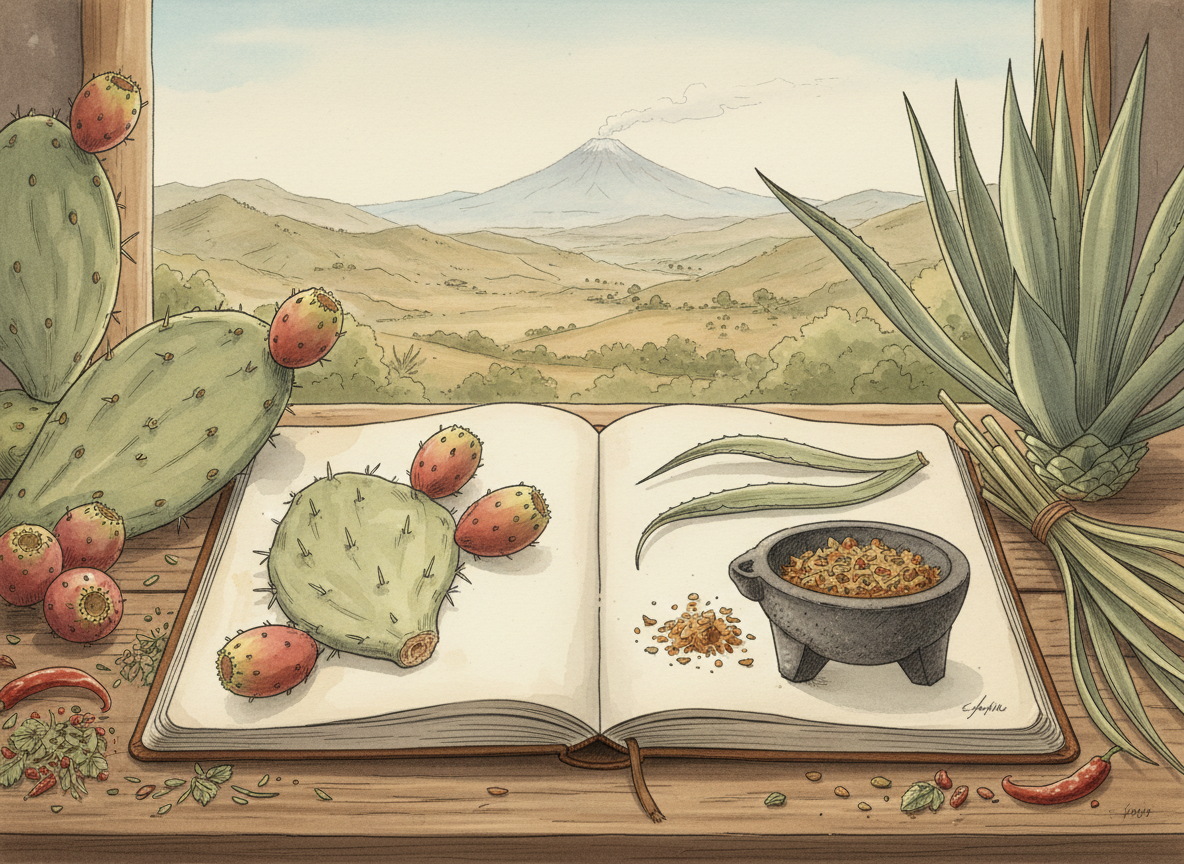
Food and laboratory research · clinical claims must be formulation-specific. Nopal (prickly-pear cactus, Opuntia species) is a food as well as a plant discussed in traditional remedies. A review of herbal medicines used in Mexico describes uses and uncertainties. Evidence about post-meal glucose from particular preparations cannot be generalized to diabetes prevention, sustained HbA1c improvement, or cancer treatment. Whole cactus pads, juices and concentrated extracts are not interchangeable.
Chaparral and the safety question
Documented herbal use · potentially serious harm. Chaparral (Larrea preparations) appears in the Mexican herbal medicine safety review. The central issue is not only whether a traditional plant works but whether oral use can cause harm. Herbal preparations have been linked with liver injury; do not treat chaparral as a cancer cure or assume that natural origin makes an oral extract safe. Liver disease and treatment-related hepatotoxicity make this particularly consequential.
Colorectal cancer claims and what the experiments establish
Preclinical and ethnobotanical research · no demonstrated patient cancer-control benefit. A 2016 literature review examined 39 species in 25 botanical families reported in Mexican medicinal-plant research on colorectal cancer. Much of the evidence involved cell or animal models, and research extracts are not household preparations. It does not establish that any plant shrinks tumors, delays progression or improves survival in humans.
Clinical interpretation and safety
Documented traditional use does not establish treatment efficacy. Extracts, infusions, foods, and isolated compounds are different interventions. Laboratory cytotoxicity is not clinical tumor control. Review supplements and interactions with the treating team; do not substitute unverified products for established cancer care.
Sources: Primary references linked in the evidence sections above. Last chapter edit: October 18, 2026. Evidence scope: selective, not exhaustive. Evidence Explorer · Methods.

