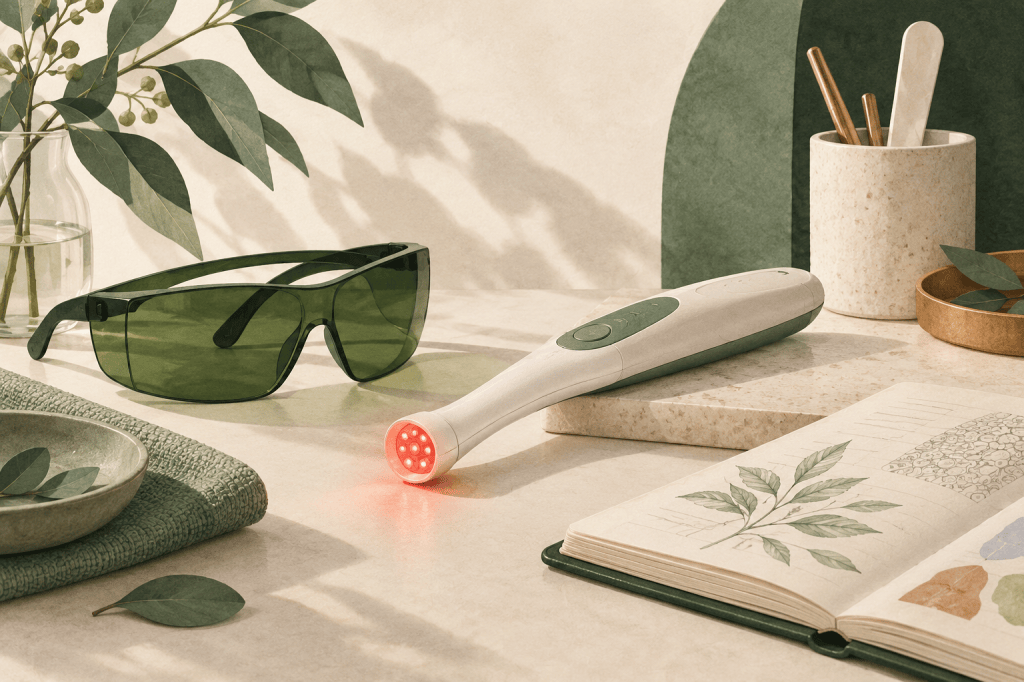
When mouth pain makes swallowing difficult, an intervention does not have to treat the tumor to matter. Photobiomodulation—carefully dosed low-intensity light applied to tissue—is one supportive-care approach with more clinical evidence than its unfamiliar name might suggest. But the device, treatment setting and schedule are part of that evidence.
Evidence at a glance
Population: adults receiving head-and-neck radiation, with or without chemotherapy, and selected transplant settings. Intervention: protocol-based intraoral light therapy. Benefit: fewer severe mouth sores in some randomized trials. Limits: protocols differ, not every trial is positive, and home red-light gadgets are not equivalent. Boundary: prevention of treatment injury, not treatment of cancer.
A new sham-controlled trial
A trial published June 26, 2026 enrolled 85 people across 12 U.S. sites receiving high-dose intensity-modulated radiation for head-and-neck cancer, with or without chemotherapy. Participants received ten minutes of intraoral LED treatment or sham treatment immediately before each radiation session.
Across six weeks, severe oral mucositis occurred in 36.8% with active treatment versus 57.1% with sham—a 20.3-percentage-point absolute difference. No device-related adverse events were reported. Preventing severe mouth injury is meaningful because it can interfere with eating, drinking and daily comfort.
There are important qualifications. Taste and pain findings came from a per-protocol analysis, which does not preserve all the protection of the original randomization. Fewer feeding-tube placements did not reach statistical significance (p=0.073). Follow-up extended only two weeks beyond radiation; this study cannot establish long-term tumor safety or survival benefit.
Guideline support is specific, not generic
The 2020 MASCC/ISOO guideline, based on systematic evidence reviews, recommends intraoral photobiomodulation using specified low-level laser protocols to prevent mucositis during head-and-neck radiation, with or without chemotherapy. It also supports selected high-dose chemotherapy and stem-cell-transplant settings.
That recommendation is not a blanket endorsement of every light source. Wavelength, energy delivered, treatment sites and frequency need to match a validated protocol. The newer LED study adds evidence for its approach; it does not make lasers, LEDs and consumer panels automatically interchangeable.
Why the less-positive trial belongs here too
The 2022 LiTEFORM trial randomized 87 adults receiving head-and-neck irradiation to low-level laser treatment or sham. Recruitment fell well short of its target, and the investigators could not draw meaningful conclusions about benefit or cost-effectiveness. That is not definitive evidence that light therapy fails, but it is a reminder that implementation and adequate trial size matter.
Safety is a clinical conversation
A 2020 systematic safety review found reassuring human evidence when recommended clinical parameters were used, despite conflicting laboratory findings about tumor-cell responses. Reassurance under studied conditions is different from proof that any dose, device or treatment location is safe.
An oncology oral-care team should select the protocol, consider the tumor location, and follow device-specific eye protection and infection-control procedures. Do not improvise by shining a home light into the mouth. The ten-minute research schedule above is a description, not a home-treatment instruction.
Light therapy also does not replace dental preparation, gentle oral care, pain treatment or nutrition support. Mouth sores with fever, inability to drink or escalating pain need prompt clinical attention—not simply another session.
Questions for the care team
- Does my treatment plan fit a guideline-supported prevention protocol?
- Is an experienced oral-medicine or radiation team offering this service?
- Which device and protocol do you use, and what evidence supports them?
- How will we track mouth pain, swallowing, nutrition and any need to change supportive care?
Evidence checked October 14, 2026. Educational review; research doses and schedules are not personal prescriptions. Explore the Missing Script article library and the podcast—coming soon.

