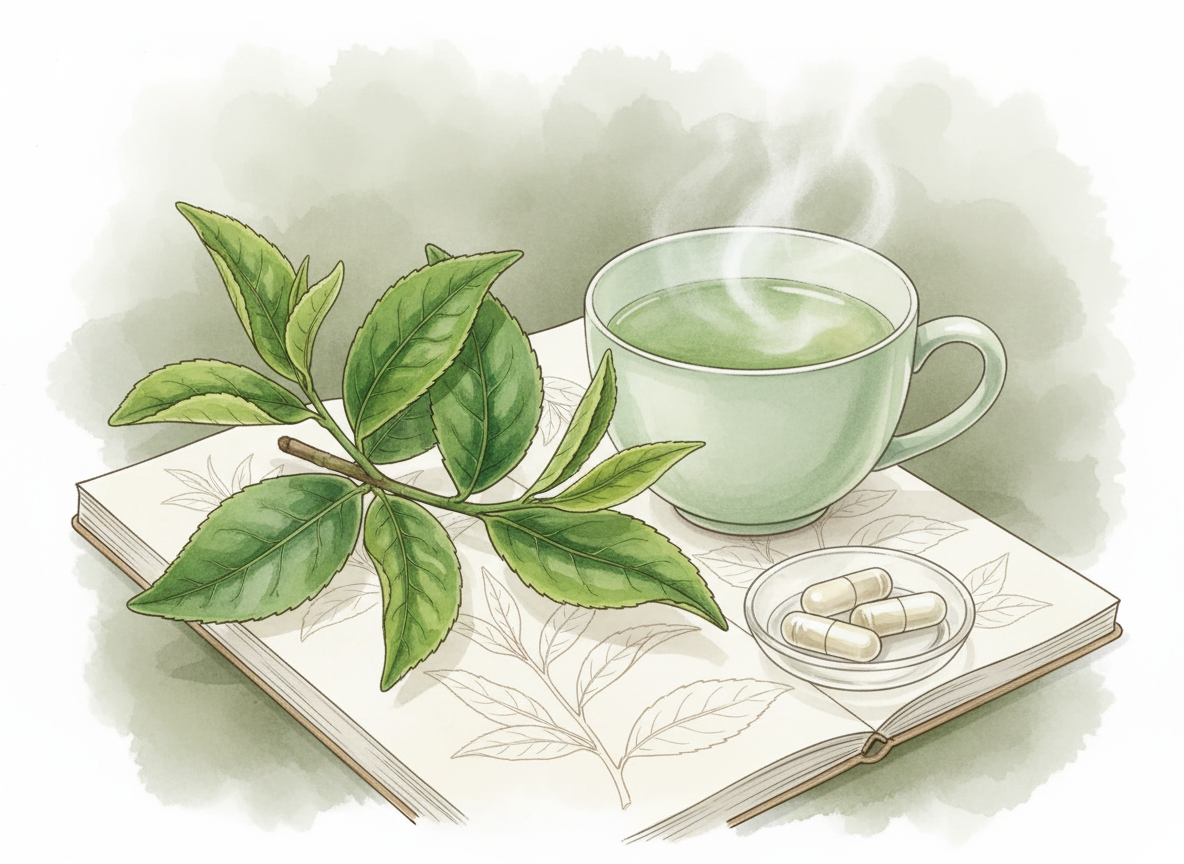
A cup of green tea and a capsule of concentrated extract share a plant, but they are not the same exposure. That distinction gets lost when laboratory findings turn into cancer-prevention headlines. The more practical question is whether a particular preparation improved an outcome that matters in people—and at what cost.
Evidence at a glance
Population: Men with abnormal prostate-biopsy findings, not a trial of treatment for established prostate cancer. Formulation: A standardized, decaffeinated green-tea catechin mixture. Finding: No statistically significant reduction in cancer diagnoses at one year. Safety: Concentrated extracts can cause liver injury and interact with medicines.
A prevention trial, not a treatment trial
The 2015 placebo-controlled trial enrolled 97 men with high-grade prostatic intraepithelial neoplasia or atypical small acinar proliferation—biopsy findings that can prompt further evaluation. The tested extract supplied 400 mg daily of EGCG, a major green-tea catechin, for one year. This is the research dose, not a recommendation to supplement.
Prostate cancer was diagnosed in 5 of 49 men assigned extract and 9 of 48 assigned placebo: about 10% versus 19%. The numerical difference was not statistically significant (P=.25), so the primary endpoint was not met. The study was small and follow-up limited; it neither establishes prevention nor proves that every possible benefit is absent.
A favorable secondary composite result combined cancer with another abnormal biopsy finding and was driven by fewer diagnoses of that abnormality. It should not replace the negative primary result in the headline. A lower PSA also does not establish fewer metastases or longer survival.
What the broader literature adds
The 2020 Cochrane review included 142 studies involving more than 1.1 million participants. Most were observational rather than randomized experiments. Findings differed by study design and cancer site, leaving cancer prevention unproven. That large participant count should not be mistaken for a million-person trial of an extract.
Observational tea-drinking habits and a standardized capsule answer different questions. People who choose tea may differ in other ways, and a commercial supplement may not match the preparation used in research. Neither a biological mechanism nor a promising subgroup result can settle those differences.
The liver-safety caveat
The European Food Safety Authority’s safety assessment found that supplements providing 800 mg of EGCG daily could raise liver enzymes. Importantly, it could not identify a safe supplemental dose from the available evidence. “Below 800 mg” is therefore not a guarantee of safety, and the 400-mg prevention trial does not establish safety for every user or product.
NCCIH’s February 2025 guidance distinguishes ordinary beverages from extracts: uncommon liver injury has been reported primarily with tablets or capsules. Nausea, abdominal discomfort and blood-pressure increases are other concerns. Medication interactions have been documented, including with nadolol and atorvastatin; an oncology-pharmacist review should consider the entire medication list, not cancer drugs alone.
This is not an argument against enjoying tea. It is an argument against treating concentration as an automatic improvement. Keep recommended prostate monitoring and treatment separate from decisions about beverages or supplements.
Practical questions for the care team
Was the study about preventing a diagnosis or treating an existing cancer? Did its main endpoint improve? How much EGCG—not merely “green-tea extract”—does this product contain? Do my liver history or medicines change the risk? Is there any demonstrated clinical benefit that justifies taking a concentrated preparation?
Evidence checked October 19, 2026. Educational review, not individualized medical advice. Research doses and schedules are not personal prescriptions. Explore the Missing Script article library and the podcast—coming soon.

