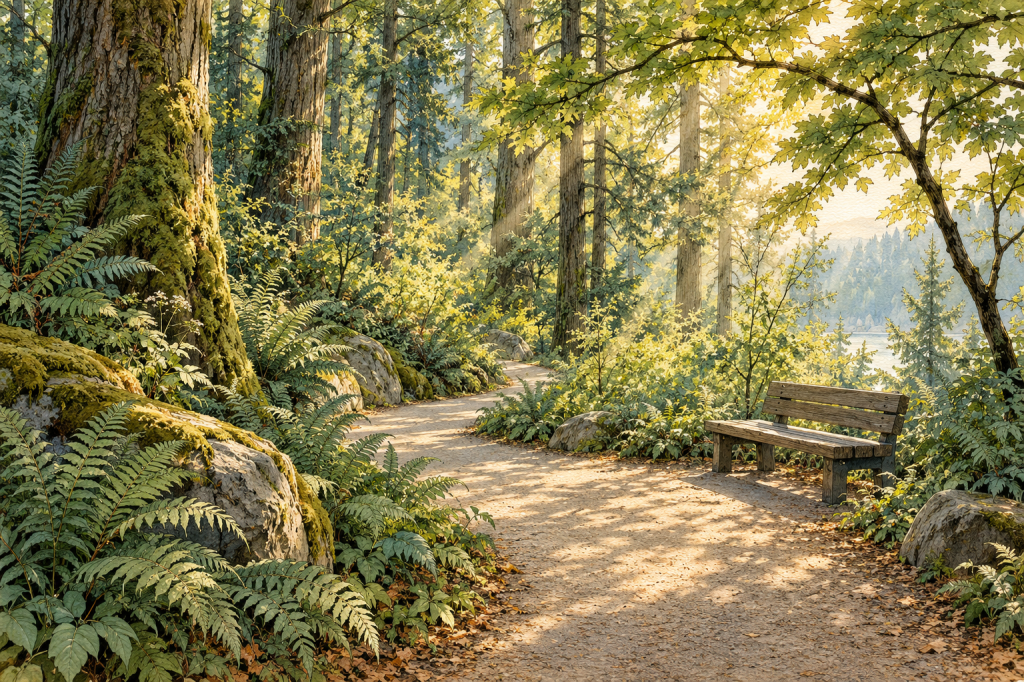
Cancer care can make life feel intensely measured: blood counts, scan dates, treatment cycles, steps, calories. There is something appealing about an activity that asks us simply to slow down and notice where we are. Forest bathing deserves a thoughtful look for that reason—and because researchers have begun testing it in cancer survivors.
The Japanese term shinrin-yoku describes spending attentive, unhurried time in a wooded environment. It might involve gentle walking, listening, breathing or sitting. There is no water involved, and it need not be a strenuous hike.
Evidence at a glance
- Studied populations: mostly small groups of cancer survivors; breast cancer is heavily represented in some studies.
- Possible benefits: short-term improvements in fatigue, sleep and emotional distress.
- Confidence: limited by small samples, unblinded programs, multiple activities and studies without comparison groups.
- Cancer outcomes: no reliable evidence establishes that forest bathing shrinks tumors, prevents recurrence or extends survival.
What the cancer studies actually found
A controlled study published in 2023 enrolled 75 people with cancer-related fatigue and offered eight forest-healing sessions. Fatigue improved more over time in the intervention group. The reported 9.1-point improvement was a change within that group, not a 9.1-point advantage over the control group. Analyses emphasizing people who attended at least six sessions also leave room for differences between those able to participate and those who were not.
A 2025 sleep pilot followed 29 women who had completed curative cancer treatment; 22 had breast cancer. Eight weekly two-hour sessions combined forest activities with breathing, meditation, sleep education and group interaction. Average Insomnia Severity Index scores fell from 14.8 to 8.1, then were 9.1 four weeks later. That size of change could matter to someone struggling with sleep.
But there was no comparison group. We cannot tell how much came from the setting, movement, sleep education, attention or the passage of time. Cortisol did not significantly change. Improvement in a sleep questionnaire should not be recast as evidence that the immune system became better at fighting cancer.
A 2026 Taiwanese study adds a similar signal: 38 survivors completed a two-hour guided forest session, with improved mood scores and lower salivary cortisol afterward. It was another single-group, before-and-after study. Immediate changes do not establish lasting benefit, and cortisol naturally varies across the day.
How much confidence should we place in this?
A 2026 systematic review of 11 studies, largely outside cancer care, found favorable short-term heart-rate and mood changes. Its authors rated the evidence very low certainty because of bias, inconsistency and imprecision. That is a useful counterweight to enthusiastic headlines.
The intervention is also a bundle. Quiet surroundings, gentle activity, a break from screens, social connection and guided attention could each contribute. Claims about tree-derived compounds or natural-killer-cell activity remain mechanistic questions. A change in an immune marker is not a validated substitute for fewer cancer recurrences.
Making the experience fit your body
There is no established oncology “dose” of forest bathing. The two-hour research sessions are not a requirement. A brief, comfortable visit to an accessible green space, including sitting on a bench, may be a more practical starting point. An expensive retreat is unnecessary.
Choose terrain and conditions around treatment effects: neuropathy, dizziness, bone metastases, balance difficulties, heat intolerance and photosensitivity may change what is safe. Consider level paths, supportive footwear, a companion, shade and local air-quality conditions. Ask your team about any movement restrictions.
Persistent fatigue or insomnia still deserves assessment for treatable contributors. Forest time can accompany established support such as CBT-I for insomnia, rehabilitation and psychological care. If nature feels restorative, that experience matters without needing an anticancer explanation.
Questions for the care team
- Could a medical or treatment-related problem be contributing to my fatigue or sleep difficulty?
- Are there walking, balance, bone-health or sun-exposure precautions for me?
- Which symptom should I track, and over what period?
- Would rehabilitation, CBT-I or counseling address the same problem more directly?
Evidence checked October 22, 2026. Educational information, not individual medical advice.
Browse the article library · Missing Script podcast — coming soon

