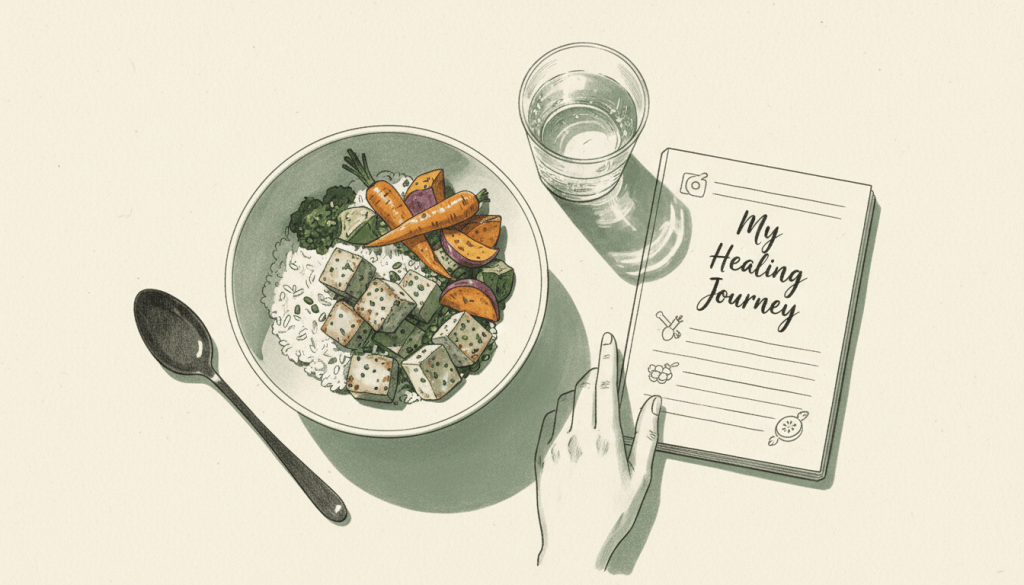
When someone is losing weight during cancer treatment, is the answer simply to eat more? Not necessarily. Eating can become hard because of nausea, taste changes, swallowing trouble, pain, diarrhea, early fullness, fatigue, or the practical cost and effort of preparing food. The useful question is what is getting in the way—and what support would make eating possible again.
What the human evidence shows
In a 2005 randomized trial published in the Journal of Clinical Oncology, 111 outpatients with colorectal cancer receiving radiotherapy were assigned to one of three groups: individualized dietary counseling using ordinary foods (37 patients), protein supplements (37), or usual intake (37).
During radiotherapy, both counseling and protein supplements improved nutritional intake. Three months after radiotherapy, the counseling group maintained improvements in intake and multiple quality-of-life measures more consistently than the other two groups. This is encouraging evidence that specific, personal nutrition support can matter—even when the food itself is not a specialized product.
What it cannot prove: This was a relatively small study in a specific population receiving radiotherapy, with follow-up to three months. Counseling was not blinded, and additional clinical attention could contribute to its effect. It does not prove a survival benefit, prevent recurrence, or establish that counseling or any nutrition shake is superior for every patient.
Why weight alone is not enough
The National Cancer Institute’s Nutrition in Cancer Care review emphasizes screening and assessment beyond a single weight measurement: changes in food intake, muscle, strength, symptoms and hydration all matter. Fluid retention can hide weight loss or muscle depletion. Cancer cachexia may also involve inflammation and metabolic changes that extra calories alone cannot fully reverse.
The 2021 ESPEN practical guideline for clinical nutrition in cancer supports early nutrition screening and individualized nutritional intervention when indicated. An oncology dietitian can help adapt food choices and textures, manage nutrition-impact symptoms with the care team, and consider oral supplements when ordinary foods are not meeting needs.
What practical support can look like
For some people, that means smaller, more frequent opportunities to eat, protein- and energy-rich foods they tolerate, soft or modified textures, or help with shopping and meal preparation. For others, it means identifying and treating a reversible problem—such as nausea, severe constipation, diarrhea, painful mouth sores, swallowing difficulty, or impaired digestion. A nutrition shake can be a useful tool, but it is not a substitute for figuring out why intake is declining.
Unintentional weight or muscle loss during active treatment is different from intentional weight management in stable survivorship. The right nutrition plan depends on treatment, symptoms, comorbidities, goals, access to food and the patient’s preferences; no single menu fits everyone.
When to contact the care team
Ask promptly about rapid unintentional weight loss, worsening weakness, persistent inability to meet fluid or food needs, or signs of dehydration. Inability to swallow, persistent vomiting, severe abdominal pain or possible bowel obstruction need urgent clinical assessment. When food intake has been minimal for a prolonged period, restarting nutrition may need supervision because of refeeding risk.
Four questions worth asking
- Can I meet an oncology dietitian before weight loss becomes severe?
- Which symptoms are preventing me from eating, and which can we treat?
- How will we monitor muscle and function, not only weight?
- Would a fortified meal or oral nutrition supplement help, and when should we review the plan?
The takeaway: Early, individualized nutrition care is a reasonable part of supportive cancer treatment. More food is not always a complete solution; better assessment and a tailored plan can make the advice actionable.
Sources and evidence context
- Ravasco et al., JCO (2005) — randomized dietary counseling trial, n=111.
- NCI Nutrition in Cancer Care PDQ — assessment, supportive care and cachexia.
- ESPEN practical clinical nutrition guideline (2021) — screening and nutritional support.
Evidence review updated November 4, 2026. This article is educational and not individual medical advice. Consult your cancer care team or a registered dietitian familiar with oncology before making major nutrition changes during treatment.
Subscribe to The Missing Script newsletter · Browse the article library

